Welcome back to the Butterfly Valve Types Series. In Part 1, we covered the wafer butterfly valve — the most economical and widely used configuration. In this second installment, we examine the lug butterfly valve: the preferred choice when dead-end isolation, independent pipe removal, or maintenance flexibility is required.
1. What is a Lug Butterfly Valve?
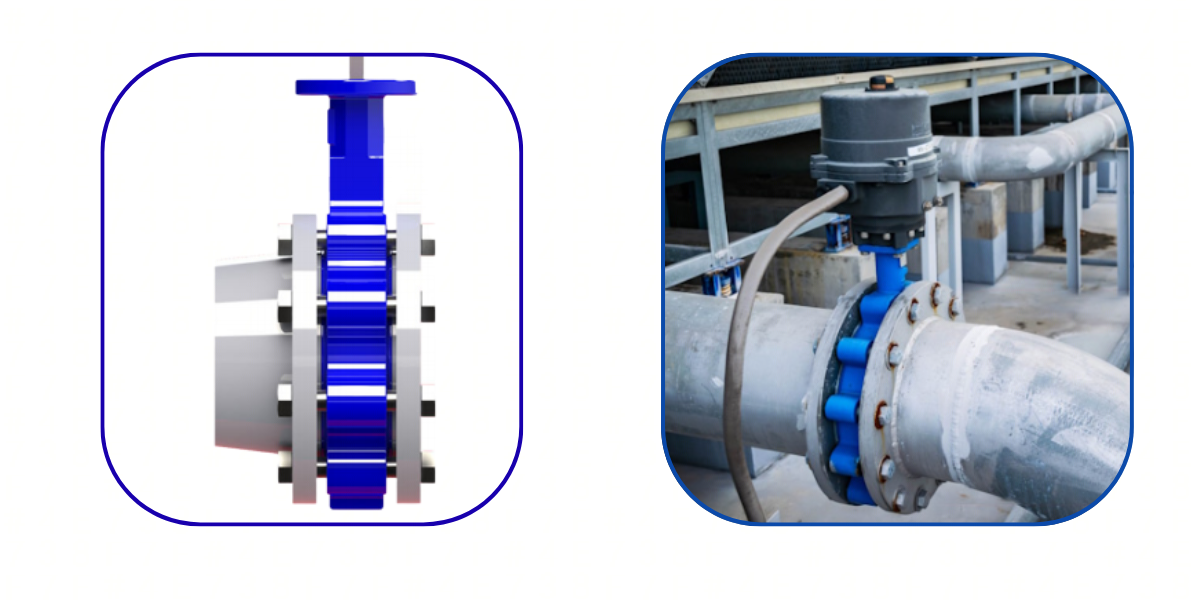
A lug butterfly valve is a butterfly valve with a body that has threaded inserts (lugs) on both flange faces. These lugs allow pipe flange bolts to be threaded directly into the valve body on each side independently, enabling several critical advantages over wafer-type valves.
The defining feature of a lug butterfly valve is that the bolts on one side of the valve can be installed or removed independently of the bolts on the other side. This means the downstream pipe can be disconnected while the valve remains bolted to the upstream pipe, maintaining system integrity and enabling dead-end isolation.
Lug butterfly valves are the standard choice for terminal isolation, maintenance teardown points, and applications where piping on one side of the valve must be removed while the other side remains pressurized.
2. Key Characteristics of a Lug Butterfly Valve
2.1 Lug Body Design
- Threaded inserts (lugs) – The body has internally threaded holes on both flange faces. These lugs receive bolts from each pipe flange independently. Lug threads are typically UNC (Unified Coarse) for ASME flanges or metric threads for EN flanges.
- Independent bolting – Bolts on the upstream side are independent of bolts on the downstream side. Each set of bolts threads only into the valve body on its respective side.
- Full lug pattern – All bolt holes on both flanges are threaded, matching the pipe flange bolt circle and count. Standard lug patterns match ASME B16.5 Class 150/300 and EN 1092-2 PN10/PN16 drilling.
- Face-to-face dimension – The lug body has the same short face-to-face as a wafer valve (per EN 558 Series 20 / API 609 Short Pattern). The body is only slightly heavier due to the extra material around the lug
2.2 Seat Design
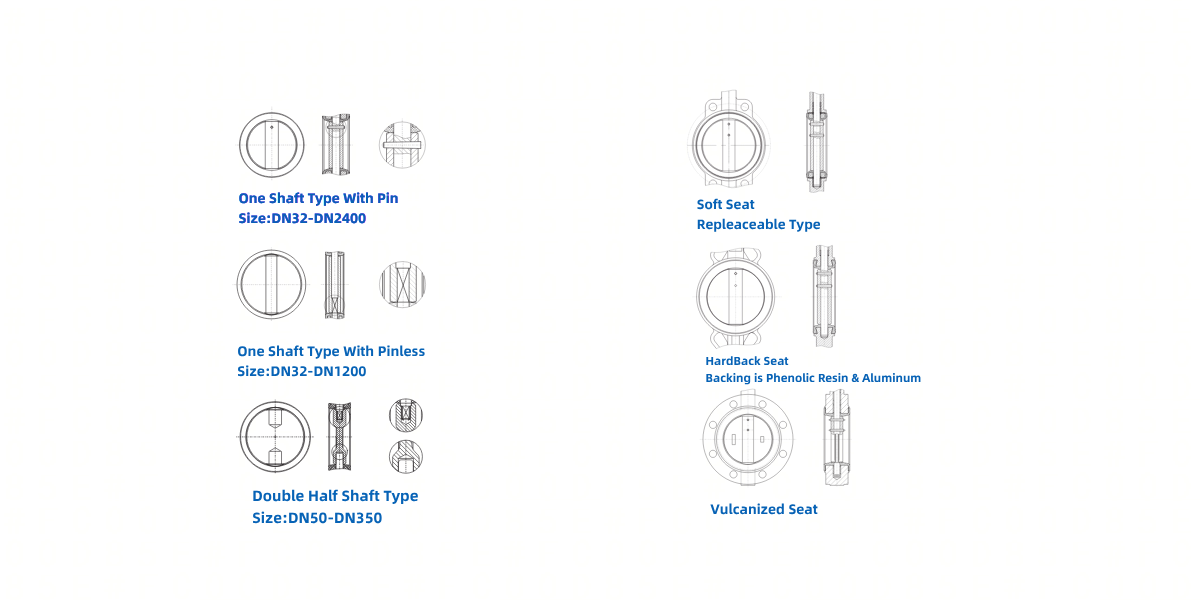
Lug butterfly valves use the same seat types as wafer valves:
- Vulcanized (bonded) seat – EPDM or NBR rubber chemically bonded to the ductile iron body. Preferred for waterworks and dead-end service where seat integrity is critical.
- Cartridge (replaceable) seat – Mechanically retained liner. Field replaceable, suitable for economy-grade applications.
- PTFE/polymer seat – For higher temperatures or chemical resistance. Used in industrial lug valves for process service.
2.3 Disc and Stem
- Disc – Ductile iron (ASTM A536), nylon 11 coated DI, 316 SS (CF8M), Al-Bronze (C95800), or Duplex SS (1.4469). The disc edge is precision-machined for consistent interference with the seat.
- Stem – One-piece blowout-proof design with bronze or PTFE-lined bearings. Materials: 13% Cr SS, 316 SS, or 17-4 PH.
- Stem seals – Field-replaceable O-rings or V-packing. Many designs allow seal replacement under pressure.
3. How a Lug Butterfly Valve Works
The lug butterfly valve operates on the same quarter-turn (90 deg) principle as all butterfly valves:
When closed, the disc is perpendicular to flow, sealing against the resilient seat. When open (90 deg rotation), the disc aligns parallel to the pipe wall for minimal flow restriction. The fundamental difference from a wafer valve is not in the operating principle but in how the valve is mounted and what it can do in terms of system isolation.
The key operational advantage of the lug design is dead-end service capability: the valve can hold full rated pressure from one side while the other side has no pipe connected. This is possible because the bolts on the pressurized side are threaded into the valve's lugs and remain securely engaged even when the opposite flange is removed.
4. Dead-End Service Explained
The most important distinguishing feature of a lug butterfly valve is its ability to provide dead-end service. Understanding what this means and why it matters is essential for proper valve selection.
What is Dead-End Service?
Dead-end service refers to the condition where a valve is installed at the termination of a pipeline, with piping only on one side. The valve must hold the full system pressure from the connected side while the other side is open to atmosphere or connected to equipment that may need removal.
Why Wafer Valves Cannot Provide Dead-End Service
A wafer valve relies on both pipe flanges to clamp it in place. If one flange is removed:
- The valve body has no mechanical retention on the open side
- System pressure can push the valve body out of the flange gap
- The seat seal is compromised, causing leakage
How Lug Valves Provide Dead-End Service
- Bolts on the pressurized side remain threaded into the valve body lugs
- The valve body is mechanically retained by the engaged bolts
- The vulcanized seat seals against the disc from one side
- The downstream flange (or equipment) can be removed safely while the valve holds pressure


