The centerline seal butterfly valve — also called the concentric butterfly valve — is the most widely used butterfly valve design in water supply, wastewater treatment, HVAC, and general industrial service. Its defining feature is that the disc seal center and the rotation center of the stem are overlapped on the same axis. This means the disc rotates precisely around the geometric centerline of the pipe bore and the seat, producing a symmetrical sealing action in every operating position.
This simple, robust design is the foundation of resilient-seated butterfly valves and remains the industry standard for medium and small-bore applications up to DN600.
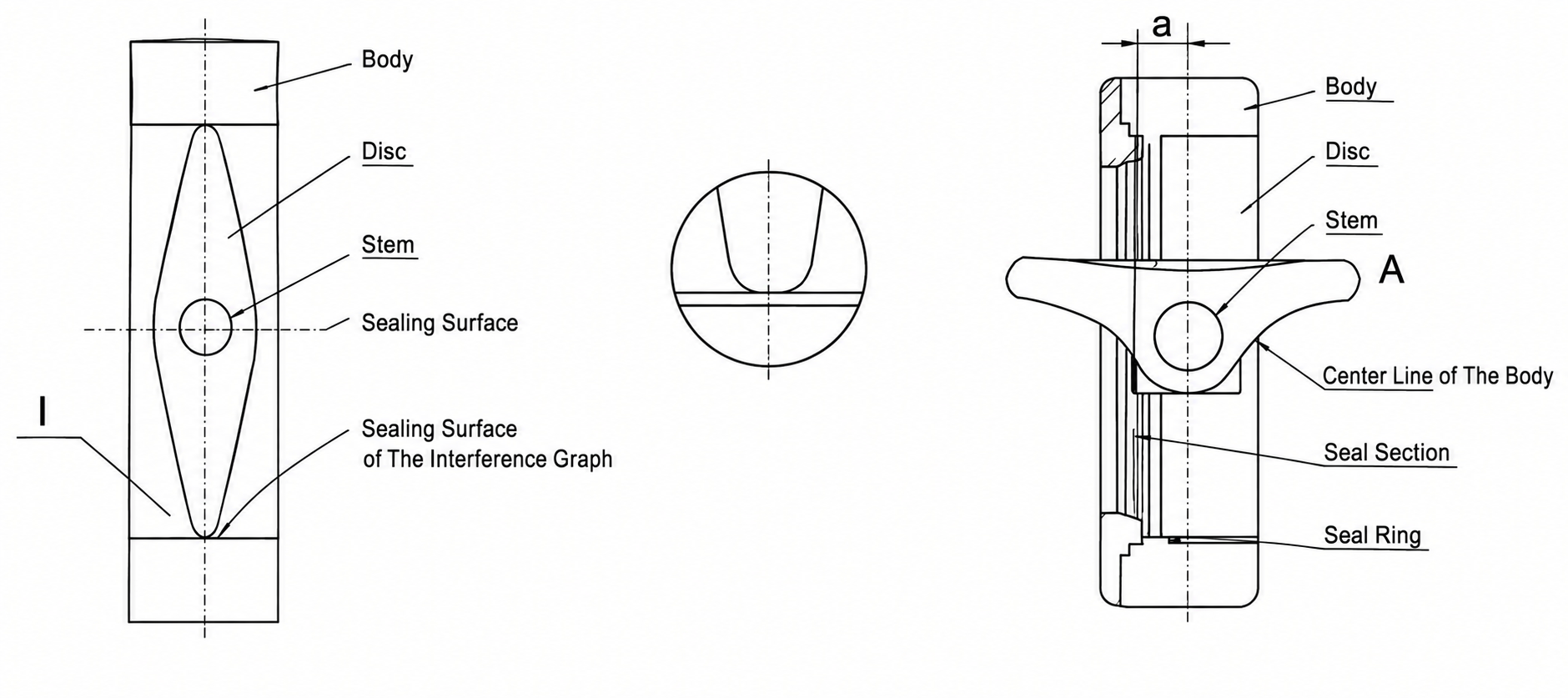
With the disc seal center and the rotation center of the stem overlapped, a sealing load is produced between the sealing faces of the seat and the disc under a certain magnitude of interference. This "interference fit" is the heart of the centerline sealing principle.
In simple terms:
This is fundamentally different from a metal-to-metal gate valve, which relies on precision lapping of two hard surfaces. The centerline butterfly valve relies on the elasticity of the seat to absorb manufacturing tolerances and create a perfect seal.
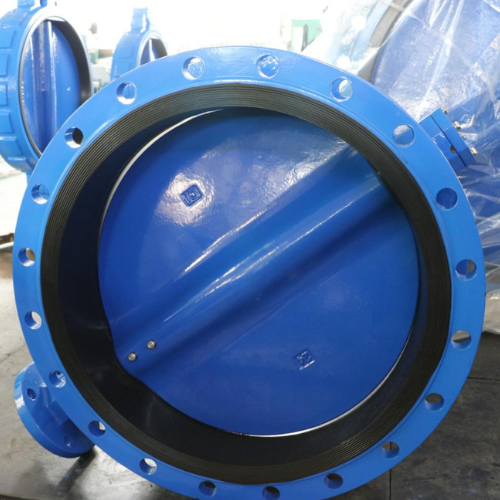
In this design, rubber is lined on the body — , and the metal disc rotates within this rubber-lined cavity. This structure is especially applicable for medium and small-bore butterfly valves (typically DN40 to DN600), where the compression forces remain manageable.
| Component | Typical Material | Function in the Sealing System |
|---|---|---|
| Body | Ductile iron, cast iron, stainless steel | Structural pressure boundary; seat is bonded inside |
| Disc | Ductile iron + Nylon 11 / epoxy coating, stainless steel | Rotating closure member; disc edge creates the interference seal |
| Seat | EPDM, NBR, Viton, Neoprene, PTFE | Elastic sealing element; deforms under interference to create contact force |
| Stem | Stainless steel 416 / 304 / 316 | Transmits operating torque; passes through the seat at upper and lower points |
| Bushings | PTFE, bronze, nylon | Stem support and friction reduction |
Because the disc must maintain interference with the seat at all times, the disc is under continuous radial compression. During the opening and closing process, the disc is always under extrusion from the seat:
This continuous contact has both a benefit and a cost:
Due to the deformation of the seat under extrusion, the upper and lower valve shafts (stems) pass through heavily loaded zones of the seat. This creates two specific problems:
Engineering solutions used to mitigate this issue include: reinforced seat collars around the stem bore, dual-seal designs where an O-ring or PTFE sleeve supplements the seat at the shaft, and precision machining of the shaft bore to reduce localized seat compression.
The open-close moment (torque) of a centerline butterfly valve is relatively high compared to a gate valve of the same size for several reasons directly related to the sealing principle:
Practical consequence: Centerline butterfly valves must be sized with adequate actuator torque. A general engineering rule is to select an actuator providing at least 1.5× the calculated operating torque to allow margin for seat aging and medium deposits. Worm gearboxes or pneumatic/electric actuators are commonly used above DN150 to manage this requirement.
Because the disc and seat are always under mutual extrusion and friction, the seat must possess specific properties to function reliably:
To ensure a good seal, the seat therefore basically uses rubber (EPDM, NBR, Neoprene), PTFE, or other elastic materials. Hard metal seats cannot satisfy the interference-fit sealing principle of the centerline design.
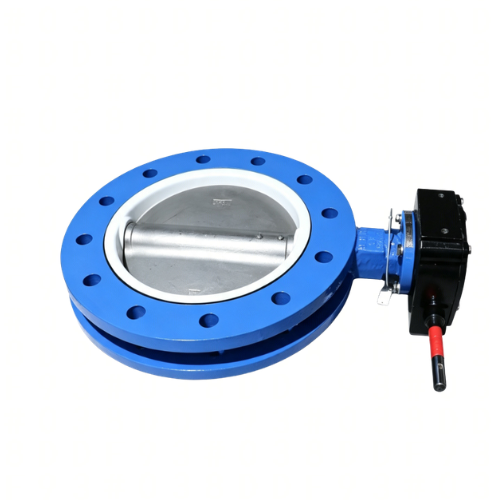
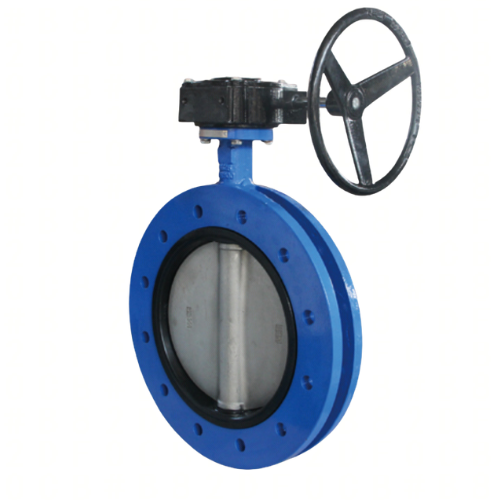
The maximum and minimum service temperature of a centerline butterfly valve is not limited by the metal body, but by the seat material. This is the key reason butterfly valves have historically been considered temperature-limited — but the practical range depends entirely on the seat selected:
| Seat Material | Min. Temp. | Max. Temp. | Key Temperature-Related Properties | Typical Service |
|---|---|---|---|---|
| EPDM | -30°C | +120°C | Excellent hot water and steam (low pressure) resistance; degrades in oils | Potable water, hot water, HVAC, wastewater |
| NBR (Buna-N) | -20°C | +80°C | Good oil resistance but limited upper temperature; hardens at low temps | Oils, fuels, lubricated air |
| Neoprene (CR) | -20°C | +100°C | Good weather, ozone and seawater resistance | Seawater, refrigeration, fire protection |
| Viton (FKM) | -20°C | +180°C | Excellent chemical and elevated-temperature performance | Aggressive chemicals, hot media, solvents |
| Silicone (VMQ) | -40°C | +200°C | Widest low-temperature flexibility; fair mechanical strength | Food, pharmaceutical, low-temp applications |
| PTFE (Teflon) | -20°C | +180°C | Near-universal chemical resistance; stiff, requires higher torque; cold flow | Chemicals, acids, solvents, high purity |
Beyond +200°C, the centerline design with an elastic seat is no longer viable — the seat material will degrade, harden, lose elasticity, or permanently deform. For temperatures above 200°C, engineers must switch to high-performance butterfly valves: double offset (double eccentric) or triple offset (triple eccentric) designs with metal-to-metal or laminated metal seats, which abandon the interference-fit elastic sealing principle in favor of a cam-action mechanical seal.
| Feature | Centerline | Double Offset | Triple Offset |
|---|---|---|---|
| Seal Principle | Interference fit — disc presses into elastic seat over full circumference | Cam action — disc swings into seat at closure only | Cam action — metal seat ring, cone-shaped sealing face |
| Seat Contact | Continuous through full stroke | Contact only in last few degrees of closing | Contact only at final closed position |
| Seat Material | Rubber / PTFE (elastic) | PTFE / RPTFE / metal laminate | Metal-to-metal (Stellite, hardened SS) |
| Max Temperature | Up to +200°C (seat dependent) | Up to +350°C | Up to +600°C+ |
| Friction & Wear | Highest — full stroke seat contact | Low — seat contact only at closure | Lowest — near-zero friction |
| Leakage Class | Class VI (bubble-tight) | Class VI (with resilient seat) | Class IV–VI (metal seat, zero leakage achievable) |
| Typical Size Range | DN40–DN600 (up to DN1800 special) | DN50–DN1200 | DN50–DN2000 |
| Cost | Lowest | Medium | Highest |
The sealing principle of the centerline butterfly valve is elegant in its simplicity: an elastic seat and an oversized disc create a continuous interference fit that seals by seat deformation. The trade-offs are inherent to the design:
For most industrial and municipal applications, these trade-offs are an excellent value exchange: bubble-tight sealing, low cost, compact size, and simple maintenance. When higher temperatures are required, the double offset and triple offset designs take over — but for water, wastewater, HVAC, and general chemical service up to 200°C, the centerline butterfly valve remains the most economical and reliable choice.
Because the centerline of the disc seal and the centerline of the stem rotation coincide on the same axis. The disc rotates symmetrically about the pipe centerline — unlike offset designs where the stem is positioned behind the sealing face.
The disc is machined slightly larger than the seat bore. When closed, it compresses the elastic seat, creating a circumferential contact pressure. As long as this contact pressure exceeds the line pressure, fluid cannot pass. Rising system pressure pushes the disc further into the seat, increasing seal tightness.
The stem penetrates the seat at the top and bottom of the bore. In these zones, the seat is compressed by both the disc interference and the stem itself — stress concentration accelerates compression set and micro-cracking. This is why reinforced seat collars around the stem bore are an important design feature.
Because the disc remains in contact with the seat through the entire 90° stroke, friction is continuous from fully open to fully closed. Additionally, the seat "sets" against the disc during long periods of closure, increasing breakaway torque.
It depends entirely on the seat material: EPDM handles up to 120°C, Viton up to 180°C, silicone up to 200°C. Above 200°C, elastic seats degrade and the centerline design must be replaced by double or triple offset designs with metal seats.
Standard centerline butterfly valves are rated PN6–PN25 (Class 150). The interference-fit design with an elastic seat is best suited to lower and medium pressures; high-pressure applications above PN25 typically move to offset designs with more robust sealing mechanics.
Laux Valve manufactures centerline seal butterfly valves in DN40–DN2400 with EPDM, NBR, Viton, Neoprene, Silicone, and PTFE seats. Contact our engineering team for seat material selection based on your medium and temperature requirements.


